
A Substack by Sonal
Week 1 - Reflections on a year of ketamine therapy

Hello!
My name is Sonal (They/Them), and I’m a South Asian artist based in Chicago. I work in journalism and am an aspiring jeweler. After hours, you can find me behind the DJ booth or doing something else seemingly unrelated yet entirely fitting (:
This is a space for me to explore the multifaceted aspects of my being and, equally as important, to share that with folks who want to listen and perhaps find themselves resonating.
Expect biweekly-ish posts from me. This schedule is subject to change, and the best way to keep up to date is to follow my Instagram (@sonalsoni), where I’ll make specific announcements.

Reflections on a year of ketamine therapy
This Substack is the start of something new, and I’d like to move forward by reflecting on my past…
Please note: This Substack piece grazes the surface of ketamine treatments based on my personal experience with intravenous infusions specifically. I aim to provide additional information by linking to external studies and other reputable sources.
This is not a comprehensive guide, but rather a conversation starter. Please research and do due diligence before proceeding with any medical decision!
I draw my tongue across my teeth and watch the colors change before my eyelids. That’s usually the peak of my trip. It starts slow once the IV bag with my diluted ketamine solution starts dripping. Then, before I know it, I’m flying. The clinic-provided reclining chair is my spaceship.

I don’t recall a time before my depression symptoms, anxiety, and other mental health struggles. Over the past several years, I was diagnosed with bipolar disorder and PTSD. My symptoms intensified, and night terrors ensued with suicidal ideation at the forefront. Talk therapy, EMDT, medication, and other methods I tried weren’t working the way I needed them to.
I reached a breaking point.
I scheduled a consultation for therapeutic ketamine treatments, followed by my first starter infusion. From there, my clinic and I worked together to find the right dose. In their words, we want you to disassociate.
Important to note:
Ketamine isn’t necessarily a replacement for other forms of treatment. It’s recommended to combine different methods. I continue to take my medication and partake in talk therapy!
Because generic ketamine isn’t FDA-regulated, the lack of oversight means more room for error. Some clinics follow conflicting protocols— I’ve received treatment from multiple centers, and the common consensus I’ve deduced: doses should start small and increase from there.
What it does:
Ketamine treatments alleviate depression symptoms amongst others as early as the first infusion. The most obvious and immediate change I noticed was that my suicidal ideation drastically declined. Sometimes it takes longer or additional treatments.
Ketamine offers a short-lived psychedelic experience. With an IV, the constant, regulated drip prolongs that trip to about an hour. Afterwards, you’ll likely experience residual effects. Once the ketamine stops flowing through your veins, the bulk of it is over.
Greater benefits follow when you maintain your treatment as recommended. The longer you receive treatments, the more infrequent your maintenance doses become.
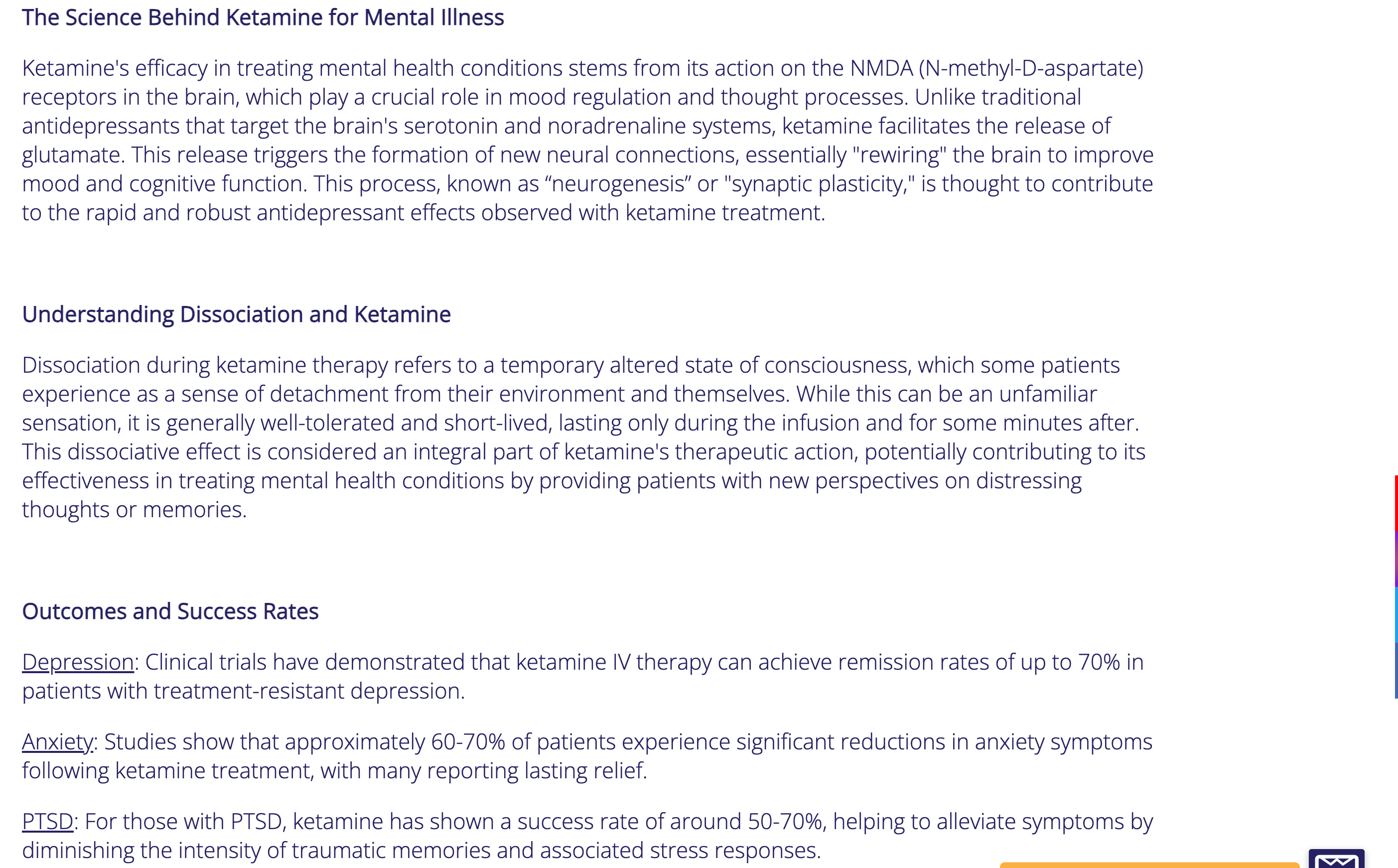
In short, ketamine infusions help to rewire neural pathways in the brain. Here’s a screenshot of more thorough summaries from one treatment center in Chicago and a list of studies explaining the science.
Clinic vs Recreational
Taking ketamine through a proper clinic tends to be more effective and safer than DIY attempts.
Recreational ketamine usage is more difficult to regulate. A clinic also ensures that what you’re receiving is proper ketamine, eliminating the risk of additives that ketamine from unverifiable sources potentially carries, those that lessen its efficacy or pose safety risks, like fentanyl.
A ketamine clinic also monitors your vitals, works with you to determine the right fitting dosage, and checks in with you before, throughout, and after your infusion. Designating the responsibility of ketamine storage and facilitation to a clinic also reduces the probability of dependency and addiction.
Why isn’t it so widely accessible?
A: Systemic barriers in public health systems.
It can cost $275+ per infusion, and insurance doesn't cover it. However, other forms of ketamine therapy, like the Spravato nasal spray, may be covered. Some clinics have more affordable out-of-pocket cost options and even offer financial aid based on income.
Here are some resources on the trajectory of ketamine treatments
The ketamine economy: New mental health clinics are a 'Wild West' with few rules
Why low-cost ketamine is still inaccessible to many with severe depression
Final thoughts
Ketamine infusions saved my life, which has improved in ways I never thought possible. I encourage folks who resonate with my story to consider all their options. Infusions worked best for my needs, but everyone is different, and one size does not fit all.
Please do your research! Start by clicking through the linked sources in this post and look into signing up for a consultation at your local, reputable ketamine clinic (many consultations are free and can be done virtually or over the phone).

I’ll end with a question I find vastly interesting, and I’ve yet to dive into it. How does music impact ketamine treatments? I listen to a clinic-provided playlist during my infusions, which I’ve linked here.
Send me your ketamine treatment music recommendations, resources on ketamine and psychedelic-assisted therapy at large, comments, questions, and reach out if you want to talk about anything related to this topic!
If you read this far, thank you (: and let me know what I should write about next, ketamine-related or otherwise.